

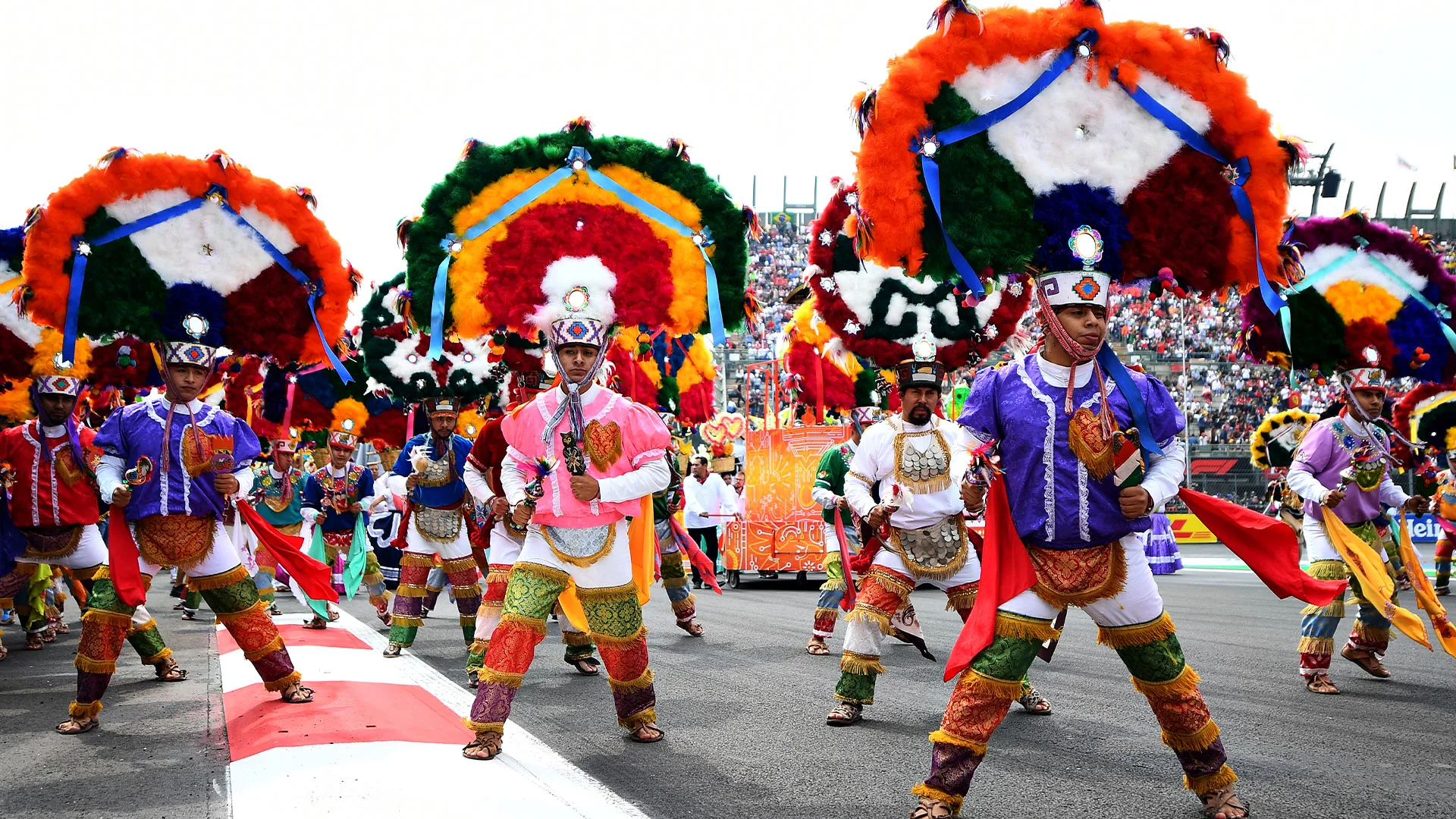
Ten years after its triumphant return to the Components 1 calendar, the Mexico Metropolis Grand Prix has turn out to be the game’s final fiesta – a celebration of velocity, tradition and nationwide satisfaction.
When F1 returned to the Autodromo Hermanos Rodríguez in 2015, it reignited a love affair between Mexico and motorsport that had been ready a era to burst again into life. What started as a revival shortly grew into one of the crucial anticipated occasions on the schedule for each drivers and followers.
The occasion has taken on a personality all its personal. From the roar contained in the Foro Sol stadium to the streets alive with music, color and marigolds, the Mexico Metropolis Grand Prix has developed into greater than a race weekend. It has turn out to be a competition that has captured the center of all the nation and, a decade on, the fiesta exhibits no indicators of slowing down.
The heartbeat: Foro Sol’s stadium spectacle
As soon as the house of baseball and nonetheless host to blockbuster live shows, Foro Sol now bears witness to a number of the most climactic moments in F1, turning the stadium into one thing solely its personal.
Constructed within the early Nineteen Nineties to host the Diablos Rojos del Mexico baseball crew, Foro Sol shortly grew to become a part of town’s id. Madonna, Paul McCartney, The Rolling Stones – most of the world’s greatest names have rocked its stage. Peace and quiet have by no means actually been in Foro Sol’s nature!
It was solely becoming then, when F1 returned in 2015 after greater than twenty years away, that organisers and circuit designers recognised the potential of the stadium. By routing the monitor by the previous baseball diamond, they created an area the place the game may meet the followers up shut.
Now the Foro Sol grandstands maintain 1000’s of spectators every race weekend. It was by no means constructed for F1 racing, but it feels as if it at all times belonged to it. The roar, the color, the emotion – Foro Sol lifts the Grand Prix to a different degree, and it’s now inconceivable to think about the race with out it.
Town that turns into a celebration
When F1 arrives in Mexico Metropolis, all the capital shifts gears. Streets which can be often thick with weekday visitors begin to buzz with color and music. Across the Autodromo Hermanos Rodriguez, the power is fixed. Followers in crew shirts spill out of metro stations, singing, waving flags, shopping for tacos from avenue distributors who’ve doubled their grills for the weekend.
However the celebration doesn’t cease on the circuit gates; it flows into each nook of the capital. Within the metropolis centre, rooftop bars host energetic watch events, murals are refreshed with racing themes, and markets glow with marigold garlands within the lead-up to the Day of the Useless celebrations.
Locals and guests drift between artwork, music and mezcal, sharing the identical electrical rhythm that defines race week. Town feels alive in each sense, and everybody desires to be a part of it.
Motorsport heritage and satisfaction
F1 has lengthy been a supply of satisfaction in Mexico, a rustic whose ardour for velocity and spirit helped form the game’s early story. The then-named Mexican Grand Prix debuted in 1963 on the Magdalena Mixhuca Circuit, earlier than the venue was later renamed Autodromo Hermanos Rodriguez in honour of local motorsport heroes Ricardo and Pedro Rodriguez.
Their fearless expertise and success on the world stage shortly morphed the Rodriguez brothers into nationwide heroes. In 1961, at simply 19 years previous, Ricardo surprised the motorsport world when he grew to become the youngest driver to race for Ferrari. His file stood for greater than six a long time earlier than it was damaged by Ollie Bearman, who stepped in as a alternative driver for Ferrari final 12 months when Carlos Sainz suffered with appendicitis.
Ricardo handed away in a deadly crash a 12 months afterward residence soil, and the torch was handed to his brother, Pedro. The older brother went on to say Mexico’s first F1 Grand Prix win on the 1967 South African Grand Prix. In a merciless accident, Pedro additionally died in an accident in 1971 throughout a race in West Germany.
Collectively they redefined what ranges of success had been attainable for home-grown Mexican drivers, inspiring generations who nonetheless really feel their affect immediately. The circuit that bears their identify stays a dwelling tribute to their lasting legacy.
For immediately’s followers, that same pride lives on through Sergio ‘Checo’ Perez. The Guadalajara-born driver has turn out to be a nationwide icon, carrying the hopes of a rustic each time he races at residence. From karting in Jalisco to 6 Grand Prix victories and 39 podiums in F1, his success is a narrative of perseverance and expertise.
Subsequent 12 months, his return to Mexico Metropolis with the brand new Cadillac F1 Group will mark the start of a brand new chapter – one which guarantees to etch his identify even deeper into F1 historical past.
Mexico’s cultural overtake
In Mexico, the followers are a key a part of the spectacle, and few locations do it as completely as they do right here. Road distributors outdoors the circuit promote marigold garlands, masks and handmade equipment that quickly fill the stands, making a vibrant patchwork of color.
Yearly, supporters weave their tradition into the weekend – from sombreros and embroidered shirts to flag capes and painted faces impressed by Día de los Muertos. They put on their id like a badge of honour, their ardour and satisfaction shining by because the grandstands erupt in color, tradition and unmistakable Mexican spirit.
As traditional, the paddock leans into the second, with drivers and groups including touches of native aptitude. Charles Leclerc drew headlines final 12 months when he arrived wearing a conventional mariachi-style outfit, whereas Daniel Ricciardo has typically joined the festivities sporting a sombrero and Day of the Useless-inspired face paint.
Sergio Perez additionally pays tribute to his roots by customized helmet designs, conventional embroidery and, extra lately, a Mexican wrestling masks on race day – we will’t wait to see what he’ll herald 2026.
Why the drivers find it irresistible
Few circuits check each man and machine fairly like Mexico Metropolis. Sitting greater than 2km above sea degree, the Autodromo Hermanos Rodriguez is the best monitor on the calendar. The skinny air strains engines, alters aerodynamics and challenges drivers’ endurance, so each lap calls for precision, rhythm and nerve.
But it’s the environment that basically takes the drivers’ breath away. From the second they arrive, they’re surrounded by the roar and pleasure of the followers. That sentiment is shared throughout the grid. Throughout his stint with Sauber Zhou Guanyu summed it up, saying: “The followers on the monitor make Mexico so particular. You actually really feel the environment – they’re very captivated with racing.”
Nobody understands that connection extra deeply than Perez. “Being on the rostrum in your house Grand Prix is one thing very, very particular,” he stated after ending P3 on the 2021 version. “I gave my full coronary heart for these individuals. I may really hear them after I was going by right here,” he stated of the second he entered the Foro Sol, surrounded by tens of 1000’s of adoring followers.
